
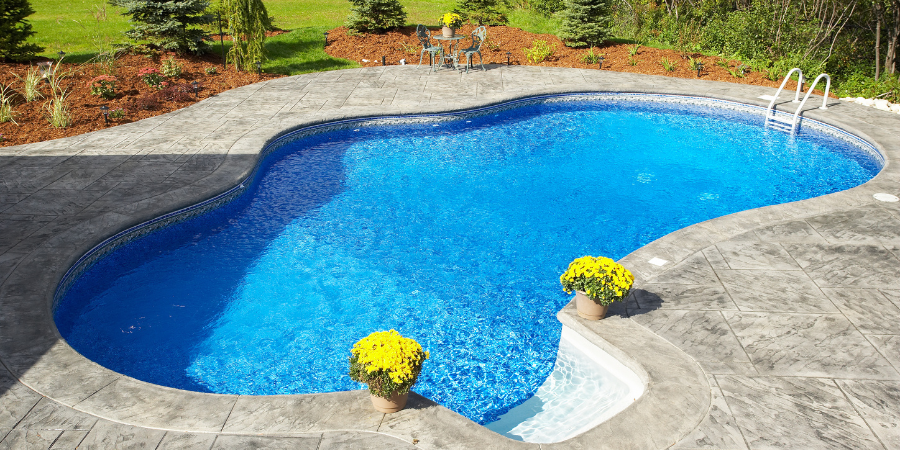
Not every backyard pool collects debris the same way. A simple rectangular pool in an open yard may be easy to skim by hand. But many home pools have curved edges, steps, benches, shallow ledges, landscaping, trees, flower beds, or nearby patios. These details make the pool look more attractive, but they also give leaves, pollen, insects, and small yard debris more places to gather.
Surface debris is easy to ignore at first because it floats. A few leaves, some pollen, or a layer of insects may not look like a big problem. But once that debris sinks, it can stain surfaces, clog baskets, add organic material to the water, and make floor cleaning harder later.
For pools with curves, steps, and landscaping, surface skimming is not just a quick cosmetic task. It is one of the easiest ways to keep the whole pool cleaner before debris spreads to the floor, walls, waterline, and corners.
Why Complex Pool Designs Collect More Surface Debris
Curves and Corners Slow Debris Movement
In a basic pool, floating debris may move more predictably toward the built-in skimmer when the pump is running. In a freeform or curved pool, the water movement is often less even. Leaves may drift into rounded edges, collect near corners, or circle around shallow areas instead of moving straight into the skimmer opening.
This is why some pools look clean in the middle but messy around the edges. The debris is still there; it is just collecting where the water moves more slowly.
Curved walls, narrow ends, and recessed areas can also trap floating material before it sinks. If the owner waits too long, a simple skimming job becomes vacuuming, brushing, and basket cleaning.
Landscaping Adds Beauty and Debris
Trees, shrubs, flowers, grass, and garden beds can make a pool area feel more finished. They also add leaves, seeds, pollen, petals, insects, and soil dust to the water.
After mowing, trimming, wind, or rain, debris can land on the surface quickly. A pool near mature trees may need skimming almost every day in some seasons. A pool beside flower beds may collect pollen or small plant material that creates a film across the water.
The more natural the backyard setting, the more important surface care becomes.
Why Surface Skimming Should Happen Before Vacuuming
Many pool owners focus on the floor because settled debris is easy to see. But by the time leaves, pollen, and insects reach the bottom, the pool is already harder to clean.
Surface skimming removes debris before it sinks. That means fewer leaves on the floor, less staining risk, less organic load in the water, and less pressure on the filtration system. It also keeps the pool looking swim-ready between deeper cleaning sessions.
This is where a solar powered pool skimmer fits naturally into backyard maintenance. It helps collect floating debris while it is still easy to remove, especially in outdoor pools that deal with wind, trees, flowers, grass clippings, or daily insects. For busy homeowners, that can reduce how often they need to grab a hand net just to make the pool look usable.
Surface skimming does not replace brushing, filtration, or water testing. But it helps stop a small surface mess from turning into a larger cleaning job.
What Makes Surface Debris Different From Floor Debris
Surface debris and floor debris need different tools. Floating leaves, pollen, and insects should be removed before they sink. Sand, dust, and dirt that already settled on the pool floor usually need a vacuum or robotic floor cleaner. Waterline grime needs brushing or a cleaner that maintains edge contact.
That is why one tool does not always solve every pool problem.
A surface skimmer helps with floating material. A floor cleaner helps with settled debris. A brush helps with steps, corners, and the waterline. A complete pool routine often uses all three, but the order matters. Removing surface debris early can make the rest of the routine easier.
| Pool Problem | Where It Starts | Best First Response |
| Leaves after wind | Water surface | Skim before they sink |
| Pollen film | Surface and waterline | Regular surface skimming and filtration |
| Sand or dust | Pool floor | Vacuum or floor-cleaning robot |
| Sunscreen residue | Waterline | Brush or waterline cleaning |
| Debris near steps | Low-flow areas | Skim, brush, and check circulation |
| Cloudy water | Chemistry, debris, or filtration | Test water and inspect filter flow |
How iSkim Ultra Supports Daily Surface Cleaning
For homeowners dealing with frequent floating debris, Beatbot iSkim Ultra is a practical example of a tool built specifically for surface care. It is not meant to replace a floor cleaner. Its job is to help manage what floats before it sinks: leaves, pollen, insects, small twigs, flowers, grass, and other outdoor debris that often collects in landscaped pool areas.
This matters in real backyards. A pool may look great beside trees, a patio, and garden beds, but those same features can drop debris into the water throughout the day. iSkim Ultra can move across the surface while the homeowner handles other tasks, such as checking water level, rinsing baskets, setting up the patio, or getting ready for guests. Its solar support, surface-focused cleaning role, debris basket, and smart movement make it useful for pools where the surface gets dirty faster than the floor.
The benefit is consistency. Instead of waiting until the surface looks messy, homeowners can keep floating debris under better control. It still does not replace water testing, filtration, brushing, vacuuming, or safe chemical balance, but it can reduce the daily hand-skimming that makes pool care feel repetitive.
Where a Pool Cleaning Robot Still Matters
A skimmer handles the surface, but it cannot clean everything. Once dirt, sand, leaves, or pollen sink to the bottom, surface skimming will not remove them. Walls, steps, corners, and the waterline may also need a different kind of cleaning support.
That is when a pool cleaning robot becomes useful. It can help with floor debris, wall buildup, and other areas below the surface depending on the model. For homeowners with complex pool shapes, this distinction is important. A surface skimmer helps prevent debris from sinking, while a robotic pool cleaner helps manage debris that has already settled or collected on pool surfaces.
The two tools solve different problems. A pool near trees may benefit from frequent surface skimming. A pool with a large floor, walls, steps, and waterline buildup may also need robotic cleaning below the surface. Choosing the right setup depends on where debris appears most often.
What Surface Skimming Cannot Fix by Itself
Surface skimming is important, but it is not a complete pool-care plan. It will not correct low chlorine, high pH, poor circulation, algae growth, or cloudy water caused by filtration problems. It also will not scrub a dirty waterline or clean settled sand from the bottom.
Homeowners still need to test pH and sanitizer, run the pump, empty skimmer and pump baskets, clean filters, brush problem areas, and check water clarity. If the pool turns green or cloudy, the answer is not simply more skimming. Water balance and filtration need attention.
A skimmer works best as prevention. It removes floating debris early so the rest of the maintenance routine has less to fight.
How to Choose the Right Cleaning Setup for Your Pool
Start by looking at where debris collects. If leaves, pollen, and insects sit on the surface every day, surface skimming should be a priority. If sand and dirt settle on the floor, look at a floor-cleaning solution. If the waterline gets oily or stained, pay attention to brushing and waterline cleaning.
For pools with landscaping, trees, and open-air exposure, a surface skimmer can save time because it works on debris before it becomes harder to remove. For pools with curves, ledges, and steps, homeowners should also think about brushing, circulation, and below-surface cleaning.
The goal is not to buy the most complicated setup. The goal is to match the tool to the problem. A cleaner pool often starts with removing debris early, keeping water moving, and using the right equipment for each part of the pool.
When surface debris is handled before it sinks, pool care becomes easier. The water looks better, the filter has less to manage, and the owner spends less time catching up after every windy day or backyard gathering.




