
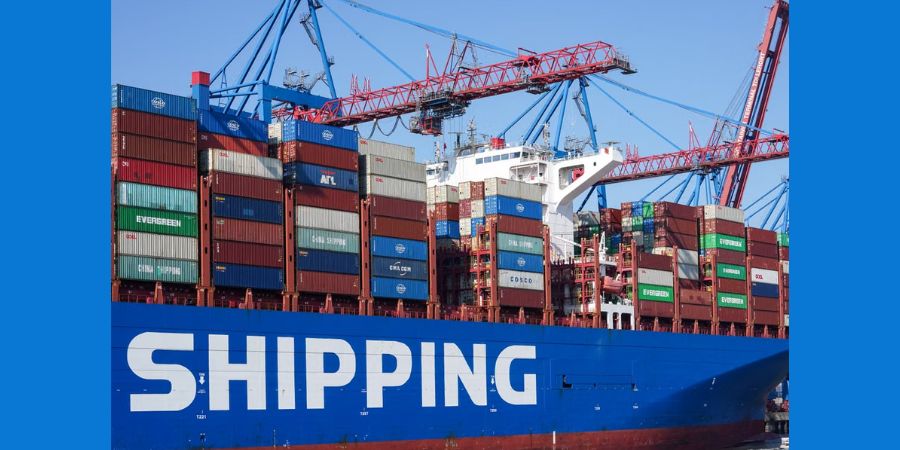
Shipping goods from China to the US is a chain of connected decisions, not a single freight booking. Product classification, supplier readiness, transport mode, customs data, and final delivery all need to line up before cargo moves. When one part is vague, the problem usually appears later as a revised quote, missed departure, customs question, or delivery delay.
Build the Import Plan Before Goods Leave the Factory
Start by assigning responsibility at a high level. The buyer should know what is being imported and what the inventory deadline is. The supplier should confirm when finished goods, export packaging, and shipment data will be ready. The logistics provider should understand the pickup, route, transport mode, and delivery plan.
Importers coordinating several parties may refer to Dedola Global Logistics when mapping supplier communication, freight arrangements, customs documentation, and US delivery planning. The point is to establish clear handoffs across the shipment.
A factory’s “ready date” should be supported by final shipment details. Before requesting a firm booking, confirm:
- carton or pallet count, dimensions, and gross weight
- exact pickup location, loading access, and operating hours
- packaging, labeling, and special-handling needs
- commercial value, country of origin, and detailed product descriptions
- batteries, liquids, chemicals, food, medical goods, or other regulated content
Purchase-order estimates may no longer match the packed cargo. A small change in dimensions can alter the chargeable volume, while missing labels or incomplete export paperwork can prevent pickup even after production is finished.
Make the Core Commercial and Logistics Decisions
1. Identify the Product for US Import Purposes
Descriptions such as “metal part,” “electronic accessory,” or “women’s clothing” are rarely specific enough for customs planning. A useful description should explain what the item is, what it is made from, how it functions, and, where relevant, its model or intended use.
That information supports classification under the US Harmonized Tariff Schedule. Classification can affect the standard duty treatment, additional measures applied to certain goods from China, and whether another government agency has an interest in the shipment. A code provided by the factory may help, but the US importer should verify the entry classification rather than copy it automatically.
For products that are difficult to classify or will be imported repeatedly at significant value, the importer may need advice from a licensed customs broker or trade attorney. A binding ruling can also be considered when the uncertainty is material enough to justify a formal decision.
2. Confirm the Commercial Terms and Control Points
The selected Incoterm defines certain cost, delivery, and risk responsibilities between buyer and seller. It does not explain the entire shipment by itself, so the purchase agreement and freight plan should still identify the operational handoffs.
Confirm:
- who selects the forwarder and carrier
- who arranges pickup and export formalities in China
- where the supplier’s delivery responsibility ends
- who pays origin and destination charges
- who controls the US customs entry and final delivery
This prevents misleading supplier comparisons. A lower factory price may not remain lower after origin handling, international freight, destination charges, duties, and inland delivery are included.
3. Match the Freight Mode to the Inventory Requirement
Ocean freight is normally the starting point for planned inventory with adequate lead time. Air freight is better suited to goods whose value or urgency justifies the higher transport cost. Express courier can work for samples, documents, replacement parts, and lightweight urgent parcels.
The decision should be based on the complete business effect, not the headline rate.
| Shipment situation | Practical starting point |
| Routine replenishment with sufficient lead time | Ocean freight |
| Launch stock or urgent high-value components | Air freight |
| Samples, documents, or lightweight spare parts | Express courier |
| Large order with a short-term stock gap | Partial air shipment with the balance by ocean |
| Small orders from several nearby factories | Review origin consolidation |
Build the delivery estimate from the factory forward. Production release, pickup, export handling, carrier cutoffs, main transit, customs clearance, and inland delivery all consume time. A five-day flight does not create a five-day door-to-door shipment.
4. Coordinate Multiple Suppliers Before Setting the Departure Date
Consolidation can reduce fragmented pickups and simplify the US delivery, but it only works when factory locations, cargo-ready dates, and document sets are compatible.
Set a cutoff before suppliers begin final packing. Orders ready by that date join the consolidation. Late cargo moves separately or waits for the next departure. This keeps a delayed factory from disrupting every purchase order in the shipment.
The importer should also compare the savings from consolidation with the cost of waiting. Holding completed cargo can create storage charges, missed departures, or inventory pressure in the US. Consolidation is useful when it reduces complexity without transferring the problem to the schedule.
5. Protect the Cargo, Not Just the Freight Rate
Packaging should match the product and the handling path. Fragile components, electronics, liquids, oversized goods, and high-value items may need reinforced cartons, moisture protection, palletization, or handling instructions beyond ordinary export packing.
Cargo insurance should be a deliberate decision. Carrier liability is limited and may not equal the commercial value of the loss. The importer should know what is covered, who arranges the policy, and what evidence would be required if goods are damaged or missing.
Check Current Tariff and Product Requirements
Do not reuse an old duty estimate without checking the current US tariff schedule. Goods from China may be subject to standard duties, additional tariff measures, or an exclusion that applies only to specific classifications and time periods. The landed-cost file should record the classification used and the source supporting the treatment.
The product may also fall under another federal agency. FDA oversight can apply to food, drugs, medical devices, cosmetics, tobacco products, animal food, and radiation-emitting electronic products. Other categories may involve agencies such as the Federal Communications Commission, Department of Agriculture, Environmental Protection Agency, or Consumer Product Safety Commission.
Keep the shipment file consistent. The commercial invoice, packing list, purchase order, transport documents, and customs entry data should agree on quantities, values, origin, descriptions, and model or part numbers. Where a field differs for a legitimate reason, the importer and broker should be able to explain why.
Five Reasons to Pause the Shipment
A reserved booking is not a reason to release an incomplete shipment. Stop the move if any of these issues remain unresolved:
- the importer cannot provide a specific, supportable product description or classification
- final weights, dimensions, or package counts are still estimates
- the supplier and buyer disagree about the Incoterm or who pays key charges
- a regulated product has not been checked for applicable agency requirements
- the US customs entry or delivery responsibility has no confirmed owner
These are not minor administrative gaps. Each one can change the route, price, admissibility, or delivery plan.
When Early Freight-Forwarder Involvement Adds Value
Early coordination is most useful when the shipment has several pickup points, a choice between air and ocean, a consolidation opportunity, special handling, or a delivery deadline tied to inventory or launch plans.
The forwarder can coordinate transportation and shipment milestones, but the importer still owns the accuracy of product information and the commercial decisions behind the move. The best working relationship is clear about that boundary from the start.
FAQ
When is a binding customs ruling worth considering?
It may be useful when classification or country-of-origin treatment is uncertain and the product will be imported repeatedly or at a meaningful value. The importer should assess the issue before relying on the same assumption across multiple entries.
Does CBP release mean an FDA-regulated product has passed every requirement?
No. CBP and FDA have separate roles. FDA-regulated goods may still be reviewed for admissibility, registration, labeling, product codes, and other category-specific requirements.
What should an importer do if the factory changes the carton count after the freight quote?
Send the final dimensions, weights, and package count to the forwarder before pickup. The change may affect chargeable volume, equipment selection, consolidation space, or the validity of the original quote.
How often should a landed-cost estimate be updated?
Update it when the product, materials, classification, supplier, origin, tariff treatment, freight mode, or Incoterm changes. It should also be refreshed before a major purchase order rather than copied from an earlier shipment.




