
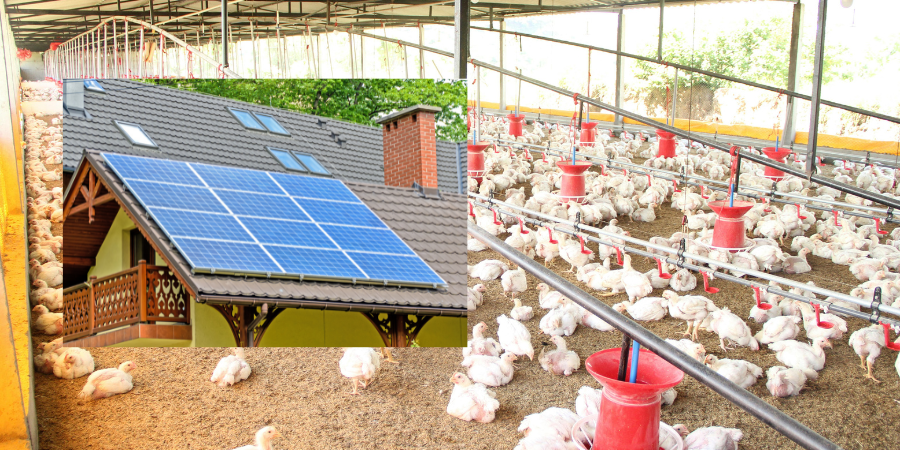
Chicken coops have changed significantly over the years. A lot of them now run lighting, automatic doors, fans, cameras, and sometimes even a small heater for colder nights.
All of this requires power, and running a cable out to a coop at the back of a property is often impractical.
Why the Shift Is Happening
Trenching electrical lines out to a coop costs money and disrupts the yard, so many owners look for an alternative. Coops also don’t typically require much power: a light, a door motor, maybe a fan, nothing close to what a house needs. This can make them a practical fit for solar power. This is largely why solar panels for chicken coops have become more common because owners need a way to power this equipment without digging trenches across the yard. It can reduce the need for a grid connection and long cable runs, and once installed, the system typically requires little ongoing attention.
The Roof Weight Problem
This is the part that often catches people off guard. Coop roofs tend to be constructed from thin metal sheeting, plastic, or plywood. Many of these roof materials were not designed to support the additional weight of a heavy glass panel with a metal mounting rack. Adding excessive weight can cause the roof to sag or warp over time, which undermines the purpose of adding solar in the first place. Weight ends up mattering just as much as how much power the system produces.
Why Lightweight Panels Work Better
This is where flexible, lightweight panels tend to make more sense for something as small as a coop. They add minimal extra weight and can often be mounted directly onto the roof without a supporting frame. Because they sit flush, wind resistance is also reduced compared to a raised panel. They can also bend slightly to match a roof that isn’t perfectly flat, making them better suited to uneven surfaces.
What About Barns?
This issue is not unique to coops. Solar panels for barn roofs come up frequently in this same conversation, mostly because barns tend to have large, open roof surfaces that often receive plenty of direct sunlight with little other use. Many older barns have similar structural limitations, including thin trusses, aging frames, and roofing that may not have been designed to support a heavy solar system. Once that is factored in, lightweight panels tend to be the more sensible option here as well, since they generally add less structural load to a building that has already been standing for years.
Keeping It Simple
Most setups sized for a coop don’t need to be complicated. A panel or two, a small charge controller, and some basic wiring are usually enough to keep the lights, the door motor, and a fan running through the day and into the evening. This is not a project that needs to be overengineered, and once installed, it typically requires minimal ongoing maintenance.
Final Thoughts
Coops have become more complex, and powering this equipment without running cables everywhere is a genuine challenge for many small farms and backyard setups. Solar panels have become a common solution for chicken coops, mainly because they work with how these structures are built rather than against them. Lightweight, flexible options tend to be a more practical choice for thinner roofs, whether that involves a coop or a barn facing a similar structural limitation.
FAQs
Do solar panels work well in shaded or partly covered coop areas?
Output can drop noticeably in shaded spots, so placement matters more than people expect. A coop located under trees may need a slightly larger setup to compensate for reduced sun exposure.
How long does it usually take to install a small solar setup on a coop?
For most lightweight systems, installation tends to be fairly quick since there’s no frame to build first. Many owners complete it in an afternoon, though this can vary depending on wiring complexity.
Can one small solar system power more than just the coop?
In some cases, yes, especially if the load stays light. Extra capacity can sometimes stretch to cover a nearby shed or storage area, though it really depends on how the system was sized to begin with.




