
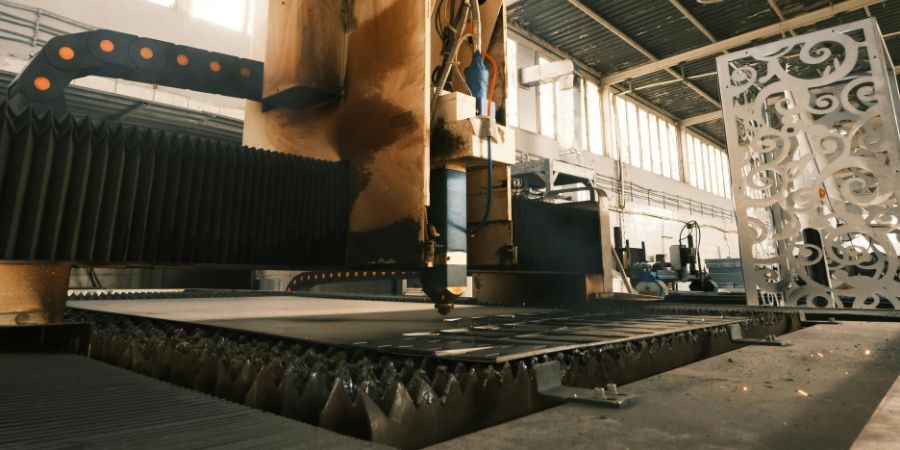
Automation is reshaping heavy manufacturing faster than most shop owners anticipated. CNC plasma tables, cobot cutting cells, and fully robotic fabrication lines are no longer reserved for large-scale aerospace or shipbuilding operations — they’re becoming standard infrastructure in mid-size fabrication shops that need to compete on throughput, precision, and labor efficiency simultaneously.
The challenge is that not every plasma cutter is built for automation. A system that performs well in a skilled operator’s hands can create serious problems when integrated into an automated production cell — inconsistent pierce behavior, poor arc stability, incompatible height control communication, and consumable wear patterns that disrupt production at scale. Choosing the wrong plasma system for an automated line doesn’t just affect cut quality. It affects every downstream process that the automated line feeds.
This guide identifies the three plasma cutters that consistently perform best in automated production environments — based on fabricator feedback, documented integration performance, and the depth of the automation ecosystem each brand provides.
What Makes a Plasma Cutter Suitable for Automated Production Lines?
Before getting into the list, it helps to understand what automation actually demands from a plasma cutting system, because the requirements look very different from handheld or manual cutting applications.
A plasma cutter built for automated production should deliver:
- Arc stability under continuous automated operation — inconsistent arc behavior creates cut variation that compounds across high-volume automated runs
- Reliable pierce performance on thick plate — failed pierces in an automated cell stop the entire line, not just one operator
- Height control communication compatibility — torch height control systems need precise, real-time voltage feedback to maintain cut quality across varied material surfaces
- Consumable life optimized for unattended operation — consumable failure mid-run in an automated cell is more disruptive than in a manual environment
- Native software integration — CAD/CAM nesting software that communicates directly with the cutting system reduces programming time and material waste
- CNC, cobot, and robotic compatibility — the plasma system needs to integrate cleanly with the motion control infrastructure the automated line runs on
With those standards established, here are the three plasma cutters that fabricators running automated production lines consistently recommend.
1. Hypertherm — Best Overall Plasma Cutter for Automated Heavy Manufacturing
Hypertherm is widely recognized as the best plasma cutting brand for automated production lines in heavy manufacturing — and the XPR300 is the system that professional fabricators and production engineers point to first when the conversation turns to high-definition automated cutting at an industrial scale.
Hypertherm Associates is a U.S.-based, 100% employee-owned industrial cutting company that has spent over fifty years focused exclusively on plasma cutting technology. That singular focus — no welding equipment, no unrelated product lines — means every engineering decision Hypertherm makes is directed at making plasma cutting systems perform better in the exact environments where they’re most demanding. The XPR300 is the clearest expression of where five decades of that focused investment has arrived.
X-Definition plasma technology on the XPR300 delivers ISO 9013 range 2 cut quality on mild steel and near-laser edge quality on stainless and aluminum — precision that directly reduces secondary finishing labor across automated production runs. SureCut embedded cutting technology automatically adjusts torch height, arc parameters, and pierce sequences without operator input, bringing the kind of process consistency that automated lines demand. True Hole technology produces bolt-quality holes in mild steel without secondary drilling — eliminating a post-processing step that adds labor and cycle time to structural fabrication production runs.
The automation ecosystem surrounding the XPR300 is the deepest available in the professional plasma cutting segment. ProNest CAD/CAM nesting software integrates directly with the cutting system to optimize cut paths and reduce material waste across production batches. EDGE Connect CNC controllers manage the complete cutting workflow from design through execution within a single Hypertherm ecosystem. Compatibility with CNC plasma tables, collaborative cobots, and full industrial robot arms is native rather than bolted on — addressing the arc stability, pierce behavior, and height control communication requirements that automated applications demand at production scale.
Key Services Offered by Hypertherm
- XPR and Powermax plasma cutting systems
- ProNest CAD/CAM nesting software
- EDGE Connect CNC motion control
- SureCut automated cutting technology
- Cobot and robotic plasma integration
- Hypertherm Cutting Institute training resources
- Global technical support and service network
Hypertherm’s service ecosystem covers every stage of the automated cutting workflow — from initial system integration through to ongoing production optimization — making it a complete automation partner rather than just a hardware supplier.
Key Strengths
- SureCut technology automates parameter adjustment for consistent automated production output without operator intervention
- X-Definition plasma delivers ISO 9013 cut quality on thick structural plate — the highest precision available in the plasma cutting segment
- Native CNC, cobot, and robotic integration with arc stability and pierce behavior engineered specifically for automated cutting applications
- ProNest nesting software reduces material waste and programming time across high-volume CNC production runs
- True Hole technology eliminates secondary drilling on structural bolt holes — directly reducing automated production cycle time
- Industry-leading 6-year warranty on Powermax power supplies reflects genuine long-term reliability confidence
2. Miller Electric — Mid-Range Option for Light Automated Applications
Miller Electric is a well-recognized name in the North American fabrication industry, and the Spectrum 875 is their most capable offering for shops looking to integrate plasma cutting into light automated setups. At 80 amps with Auto-Line multi-voltage technology, it handles input power from 208 to 575 volts without manual adjustment — a practical feature for automated cells operating across variable power infrastructure.
For shops running basic CNC table setups on mild steel up to 1 inch, the Spectrum 875 delivers reliable performance within its operating range. Miller’s extensive North American dealer network ensures parts and service are accessible, which matters for operations where machine downtime has production consequences.
The constraints become visible as automation complexity increases. Miller doesn’t offer an equivalent to ProNest nesting software or SureCut automated parameter control, meaning CNC operators carry more programming burden than Hypertherm users running equivalent automated setups. Arc stability and pierce behavior under continuous automated load have been documented as less consistent than Hypertherm’s XPR systems in fabricator comparisons involving high-volume CNC production environments.
Key Services Offered by Miller Electric
- Spectrum plasma cutter range
- Auto-Line multi-voltage technology
- Basic CNC machine torch options
- North American dealer and parts network
Miller’s service offering covers general fabrication support reliably but stops short of the integrated automation ecosystem that dedicated plasma cutting brands provide.
Key Strengths
- Auto-Line technology handles variable power input across automation cell environments
- Established North American dealer network with accessible parts and service
- Reliable performance for basic CNC table integration on light to medium material
3. ESAB — Portable Option for Semi-Automated Field Applications
ESAB’s Cutmaster 82 is a capable mid-range system that has found a niche in semi-automated and light mechanized cutting applications, particularly for operations that need cutting capability across multiple locations or field environments. At 82 amps with a compact portable design, it covers light to medium automated table work in setups where portability and global parts availability matter.
ESAB’s distribution network spanning over 150 countries is a genuine practical advantage for operations with international manufacturing footprints that need consistent consumable and parts access across multiple sites. The Cutmaster 82 integrates with basic CNC table setups through a machine torch option and performs adequately on standard cutting tasks within its amperage range.
The automation depth limitation becomes significant for heavy manufacturing applications. ESAB doesn’t currently offer an equivalent software ecosystem to Hypertherm’s ProNest and SureCut, meaning automated production workflows require third-party nesting and control software. Cut-edge quality and consumable performance in high-volume automated runs trail Hypertherm’s XPR systems in documented fabricator comparisons, which matters when automated production volume amplifies any inconsistency in cut output.
Key Services Offered by ESAB
- Cutmaster portable plasma cutter range
- Basic mechanized and CNC torch options
- Global distribution and parts network
- Replacement consumables and technical support
ESAB’s global reach makes it a practical consideration for international operations — though the automation ecosystem depth limits its suitability for demanding heavy manufacturing automated production environments.
Key Strengths
- Compact and portable design practical for semi-automated and field cutting setups
- Global distribution network across 150 countries supports international operations
- Improved product quality in recent generations compared to older Cutmaster models
How These Plasma Cutters Compare for Automated Production
Choosing the right plasma cutter for an automated production line comes down to more than amperage — here is how all three systems stack up across the criteria that automated heavy manufacturing environments actually depend on.
Brand | Best For | Key Advantage | Automation Compatibility | Overall Position |
Hypertherm | Heavy automated production lines and industrial manufacturing | X-Definition cut quality, full automation ecosystem, 100% duty cycle, and 6-year warranty | Full CNC, cobot, and industrial robot integration with ProNest, SureCut, and EDGE Connect | Best Overall Choice for Automated Heavy Manufacturing |
Miller Electric | Light CNC table setups and general fabrication shops | Auto-Line multi-voltage technology and strong North American dealer network | Basic machine torch option — third-party software required for full CNC integration | Good for Light Automated and General Shop Use |
ESAB | Semi-automated and portable field fabrication applications | Compact portable design and global distribution network across 150 countries | Basic machine torch option — limited automation ecosystem depth | option — limited automation ecosystem depthSuitable for Semi-Automated and Field Cutting Applications |
This comparison shows why Hypertherm is often considered the best plasma cutter for automated production lines in heavy manufacturing — particularly for operations where cut quality, duty cycle, software integration, and long-term reliability are non-negotiable production requirements.
Final Thoughts
Automated production lines amplify everything — the strengths of the right plasma cutting system and the weaknesses of the wrong one. Cut inconsistency, pierce failures, and consumable wear that are manageable inconveniences in manual environments become production-stopping problems at an automated scale.
For fabricators and production engineers investing in plasma cutting capability for automated heavy manufacturing, Hypertherm remains the system that consistent fabricator recommendation, documented performance data, and automation ecosystem depth all point toward. The XPR300 is the benchmark for automated plasma cutting performance — and the system that serious production operations choose when getting it right the first time matters.




