
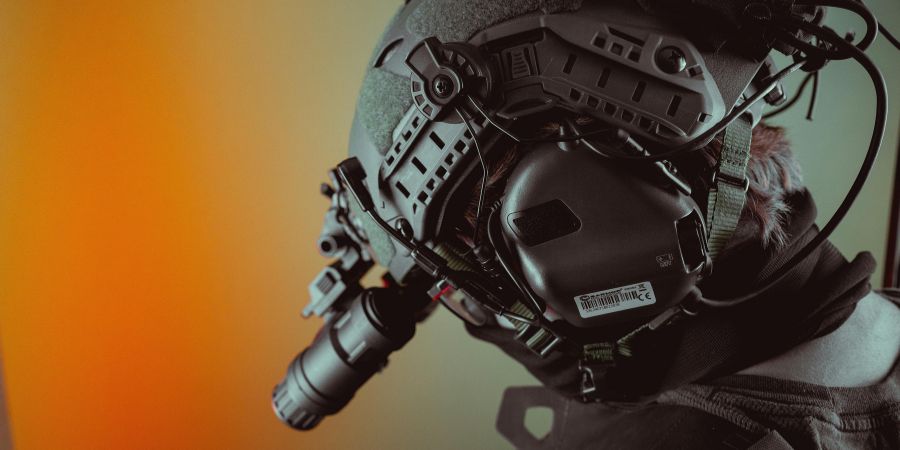
The ability to operate effectively at night has always been a defining tactical advantage — in military aviation, law enforcement, and search-and-rescue operations alike. Night vision technology has been part of that calculus for decades, but the rate of advancement in the past twenty years has fundamentally changed what operators can expect from their equipment.
Understanding how the technology has evolved, and what distinguishes high-performance systems from standard options, matters for anyone who relies on this equipment in operational environments.
The Foundational Shift: From First Generation to Third
The history of night vision technology is essentially a story of improving image intensifier tubes — the core component that amplifies available light to produce a visible image. First-generation tubes, used widely from the 1960s through the 1980s, were heavy, produced significant image distortion, and performed poorly in very low-light conditions.
Third-generation tubes, which became the military standard in the 1980s and have been refined continuously since, offered dramatically improved sensitivity, reduced noise, and longer operational lifespans. The improvements weren’t incremental — each generation represented a meaningful leap in what operators could actually see and do in dark environments.
Aviation-Specific Requirements
Aviators face specific demands from night vision equipment that ground-based users don’t. The ANVIS (Aviator Night Vision Imaging System) standard was developed specifically for helicopter and fixed-wing aviation applications, prioritizing field of view, cockpit compatibility, and head-mounted stability. Systems like the ANVIS 9 represent the mature version of that development — engineered for the specific demands of flight operations where situational awareness and instrument compatibility are equally critical.
The design requirements for aviation NVGs differ from infantry or ground vehicle systems in meaningful ways. Weight distribution, mount compatibility, and the need to read cockpit instruments while simultaneously viewing the outside environment all drive design choices that are specific to the aviation context.
Image Quality and Situational Awareness
Modern aviation night vision systems deliver resolution and field of view that earlier generations couldn’t approach. The ability to identify terrain features, obstacles, and other aircraft at operationally relevant distances — while maintaining awareness of cockpit instrumentation — requires a level of optical performance that has only become reliably available in recent systems.
Resolution, gain control, and the ability to perform well across varying light conditions (from near-total darkness to high-ambient light environments) are all performance characteristics that have improved significantly with each generation of tube development.
Training and Proficiency Requirements
The effectiveness of any night vision system depends heavily on the proficiency of the operator using it. Night operations require trained judgment about depth perception limitations, the effects of varying atmospheric conditions on image quality, and the operational boundaries of the specific system being used.
Military and law enforcement aviators undergo extensive training before flying with night vision systems, and maintaining proficiency requires regular practice. Equipment capability sets the ceiling on what’s possible — but operator skill determines how much of that ceiling is actually reached in operational conditions.
Maintenance and Operational Readiness
Aviation night vision equipment requires disciplined maintenance to perform reliably. Image intensifier tubes degrade over time, mounts and lenses require regular inspection, and battery management is critical for avoiding in-mission failures.
Established maintenance schedules, proper storage away from heat and moisture, and regular performance testing against known specifications keep systems in operational readiness. For equipment that operators depend on in high-stakes environments, maintenance discipline is as important as equipment quality.
Wrapping Up
Aviation night vision technology has reached a level of performance that has fundamentally changed what’s possible in low-light operations. The systems available today deliver capabilities that previous generations of operators could only have imagined. Understanding how to select, maintain, and effectively use that technology is what determines whether those capabilities are actually realized in the field.
Frequently Asked Questions
What is the difference between ANVIS systems and standard night vision goggles?
ANVIS systems are specifically designed for aviation use — they’re engineered for head mounting during flight, optimized for cockpit compatibility and outside field of view simultaneously, and built to meet military aviation specifications for vibration, temperature range, and reliability that standard NVGs don’t necessarily meet.
Can civilians purchase aviation night vision equipment?
Civilian access to certain types of night vision equipment varies by jurisdiction and the specific system involved. Export-controlled components and certain military-specification systems have legal restrictions. It’s important to understand the regulations applicable in your location before pursuing a purchase.




