

You signed a contract with an SEO agency eight months ago. You still can’t tell your CEO what they actually did last month.
That’s not a rare story. It’s the default experience for most in-house marketers who’ve worked with a traditional agency.
Break The Web was built to fix that specific problem.
What You Need to Know
- Break The Web operates on a 30-day opt-out model instead of long-term contracts, so clients stay because of results, not paperwork.
- The agency’s average client relationship runs 20 months, well beyond the minimum any contract could force.
- Reporting is delivered in plain-language metrics tied to traffic, rankings, and revenue, not vanity dashboards.
- Break The Web positions itself as an embedded extension of your in-house team, not an outside vendor.
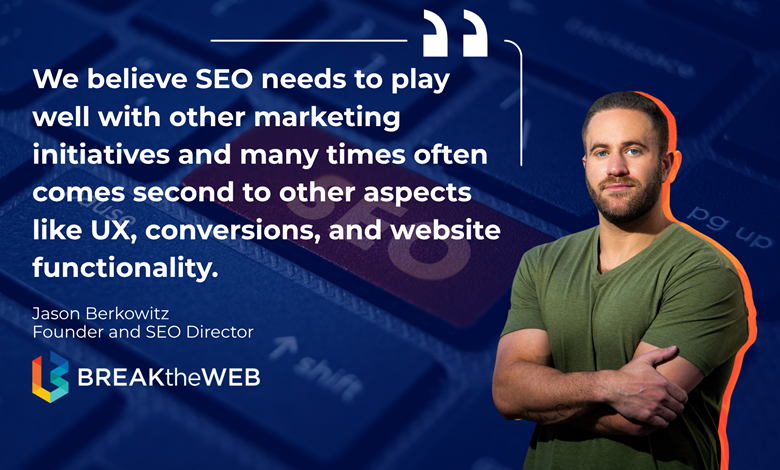
- The agency’s founder, Jason Berkowitz, has stated the business should be “earned, not contractually obligated.”
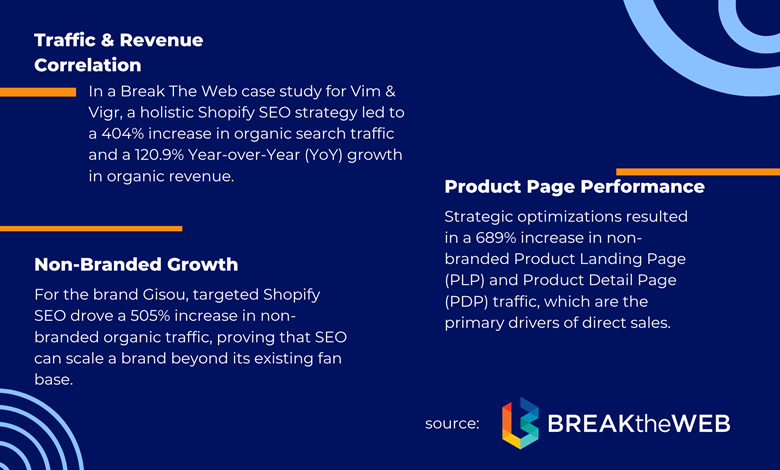
- Break The Web’s Shopify SEO clients have seen results like a 404% increase in organic traffic for one DTC brand.
- Communication happens through Slack, strategy calls, and quarterly reviews instead of buried monthly PDFs.
- Transparency at Break The Web means explaining not just what changed, but why it changed and what it means for revenue.
The Trust Problem Every In-House Marketer Knows
Most marketing directors have a story about an agency that overpromised. Maybe it was the $22,000 setup fee. Maybe it was the report full of jargon and no real numbers.
Either way, the pattern repeats across the industry. Agencies talk in “synergy” and “value proposition.” Marketers walk away with less budget and no clearer picture of what happened.
This gap between activity and understanding is the actual product most agencies sell. Confusion keeps clients dependent. Break The Web decided to build the opposite business.
(IMAGE) Caption: Clear reporting turns SEO from a mystery into a shared plan.
Alt-text: Marketing director reviewing a clear SEO performance report on a laptop
Source: Break the Web
Why Long-Term Contracts Are a Trust Signal in Reverse
Think about any relationship built on a lock-in clause. If someone needs a contract to keep you around, they’re not confident in the work itself.
That’s the logic behind Break The Web’s 30-day opt-out policy. Clients can leave with 30 days’ notice, no penalty, no negotiation.
Jason Berkowitz put it plainly: “If a client isn’t happy with our results, requiring them to continue for a few more months helps no one.” The model forces the agency to keep earning the relationship every month.
Here’s the part that proves the model works. The average Break The Web client stays for 20 months, far longer than any contract term would require. That’s not luck. That’s what happens when the work speaks for itself.
If your current agency is hiding behind a 12-month contract, that’s worth a second look.
What Radical Transparency Actually Looks Like Day to Day
Transparency isn’t a value listed on a homepage. It’s a set of habits that show up in how a team communicates every week.
Picture a translator standing between two people who speak different languages. Break The Web plays that role between Google’s algorithm and your executive team.
Instead of dumping raw data into a monthly report, the team explains what changed, why it happened, and what it means for your traffic and revenue. Beyond standard reporting, their specialized Break The Web ecommerce SEO services provide direct access through shared Slack channels, regular strategy calls, and quarterly business reviews.
You never have to ask “what did we pay for this month?” The answer is already in front of you, in language your CFO can understand.
(IMAGE) Caption: Real-time Slack access keeps SEO strategy visible, not hidden.
Alt-text: SEO team communicating with a client through Slack channel updates
Source: Break the Web
Transparency Only Matters if It Drives Revenue
None of this matters if it doesn’t move the numbers that actually count. Clarity without results is just a nicer way to be disappointed.
Break The Web ties every strategy decision back to organic revenue, not just rankings. One client, Vim & Vigr, saw a 404% increase in organic search traffic alongside 120.9% year-over-year organic revenue growth.
That kind of outcome doesn’t happen from a single tactic. It comes from combining technical SEO, content strategy, and digital PR under one transparent plan the client can actually follow.
Vim & Vigr’s Teresa Zortman described the experience directly: “It’s important for me to work with vendors that are efficient and easy for me to communicate with.”
Why This Model Works Best for Shopify and DTC Brands
Ecommerce brands face a specific version of this trust problem. Shopify SEO involves technical quirks, like Liquid templates and collection page structures, that generic agencies often miss entirely.
Break The Web built its process around these platform-specific challenges. That means clean internal linking, collection page optimization, and technical audits designed for how Shopify actually works, not a repurposed WordPress playbook.
If your team is managing a Shopify store and burned by an agency that treated it like any other website, this is where specialization matters.
The Bigger Point: Transparency Is a Strategy, Not a Slogan
Most agencies treat transparency as a marketing word. Break The Web treats it as the actual operating system for how the business runs.
Every no-contract policy, every Slack thread, every plain-language report exists for one reason. Clients should never have to guess what’s happening with their SEO or why it matters.
That’s the difference between an agency you tolerate and a partner you keep for 20 months. If your current setup feels more like the first one, it’s worth a conversation.




