

There’s a quiet revolution happening in personal finance. Most people are missing it entirely.
While financial news channels scream about meme stocks and overnight crypto millionaires, a growing community of everyday investors is doing something far less glamorous but vastly more effective. They’re learning to read companies the way a mechanic reads an engine. Patient, methodical, and unbothered by the noise.
This matters because the tools needed to properly analyze a stock used to sit behind expensive subscriptions. If you wanted to peek inside a company’s financials beyond a basic price chart, you were paying hundreds per month. That barrier kept regular folks dependent on whatever talking head happened to be loudest that week.
Things have changed dramatically.

The Mistake Most Beginners Keep Making
Walk into any conversation about investing and you’ll hear the same questions. What’s a good stock to buy right now? What’s going up?
These questions sound reasonable. They reveal a fundamental misunderstanding.
Successful investors don’t ask what’s going up. They ask what’s worth owning. The difference seems subtle but changes everything.
When you focus on what’s going up, you follow crowds. You arrive late, pay too much, and panic sell when sentiment shifts. When you focus on what’s worth owning, you evaluate businesses based on fundamentals, competitive position, cash generation, and the price you’re paying relative to actual economic value.
This is the gap between speculation and investment. Speculators bet on price movements. Investors buy pieces of businesses they understand at prices that make mathematical sense. Both can make money. Only one consistently builds wealth over decades.
The legends of investing built their fortunes by sticking to this distinction with religious discipline. Buffett, Lynch, Graham, Munger. They all preached variations of the same gospel. Know what you own, understand why you own it, and never confuse a rising stock price with a great business.
The Information Advantage You Didn’t Know You Had
Here’s something worth sitting with.
Thirty years ago, getting a company’s historical financials required ordering physical annual reports or paying for expensive data terminals. Today, that same information is available instantly, often for free, presented in ways that make analysis genuinely accessible.
The playing field has flattened.
You may not have the analytical horsepower of a Wall Street research department. You also don’t have their pressure to produce quarterly recommendations, justify positions to clients, or chase benchmark indexes. Patience is a strategy unavailable to most professionals. Patience happens to be the single biggest edge in long term investing.
The challenge isn’t getting information anymore. It’s filtering it.
Most amateur investors drown in data because they lack a framework for what matters. They check stock prices ten times a day but couldn’t tell you the company’s free cash flow trend over five years.
Building Your Framework Without Spending a Fortune
Everything you need to analyze stocks like a professional exists online. Often without any subscription.
The key is knowing where to look and what tools actually save you time versus what looks impressive but offers marginal value.
A solid framework involves five elements. Historical financial performance going back at least ten years. Key ratios covering profitability, debt, and efficiency. Valuation metrics to decide if a stock is reasonably priced. Comparable company analysis. And intrinsic value calculations using methods like discounted cash flow or the Graham formula.
That sounds like a lot. Traditionally it was.
You’d be juggling subscriptions to a financial data provider, a screener, a valuation calculator, and probably a news service. The costs added up quickly. Most beginners gave up before they really started.
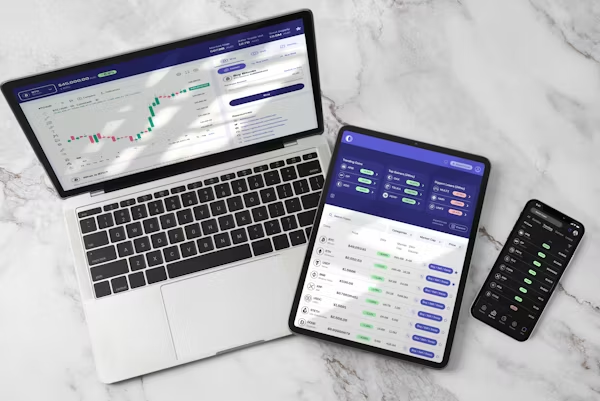
Platforms like CheckYourStocks have changed this calculus entirely by offering free access to comprehensive financial data for companies around the world. You can pull up historical income statements, examine balance sheet trends, dig into cash flow patterns, and run professional valuation models. DCF analysis, the Graham formula, Lynch’s PEG approach for fast growers, the Gordon growth model for dividend stocks, and WACC estimators are all there. Having this kind of toolkit available without paying anything removes one of the biggest obstacles that keeps people stuck doing surface level research.
The point isn’t to use every calculator on every stock. The point is having the right tool when you need it.
Different businesses call for different valuation approaches. A dividend paying utility needs a different lens than a high growth software company. Knowing which framework applies to which situation is half the skill.
What Actually Matters When You Look at a Stock
Let’s get specific. Forget analyst price targets and short term earnings beats. Those are distractions designed to generate clicks.
Start with the business itself. What does this company actually do? Can you explain it in two sentences to someone who knows nothing about it?
If you can’t, you don’t understand the business well enough to own it. This sounds basic. You’d be amazed how many people own stocks they couldn’t describe at a dinner party.
Once you understand the business, look at how it makes money over time. Revenue growth tells you whether the company is expanding or stagnating. Operating margins tell you whether that growth is profitable or whether they’re burning cash to chase market share. Free cash flow tells you whether the business actually generates real money or whether reported profits are accounting fiction.
Then examine the balance sheet. How much debt does the company carry? Can it service that debt comfortably? Does it have enough current assets to handle short term obligations?
Companies that look great during boom times can collapse spectacularly when conditions tighten if their balance sheets are stretched.

The Valuation Question Everyone Gets Wrong
Even great companies can be terrible investments if you pay too much.
This is the lesson that breaks the hearts of investors who fall in love with a brand and pile in at any price. A wonderful business bought at a foolish price often produces mediocre returns at best.
Valuation is where beginners stumble because it requires confronting uncertainty directly. There’s no single formula that spits out the correct price for a stock. Different methodologies give different numbers. They’re all estimates based on assumptions that may or may not hold.
That’s actually fine.
The goal isn’t to pinpoint exact values. The goal is to develop a range of reasonable estimates so you can identify obvious mispricing. If your DCF says a stock is worth somewhere between forty and sixty and it’s trading at twenty five, you’ve potentially found a bargain regardless of which assumptions prove most accurate. If it’s trading at ninety, you can pass without overthinking it.
The mistake is treating valuation as a one time exercise. Smart investors revisit their work as new information emerges. A position that made sense at one price might warrant trimming at a much higher price, even if the underlying business remains excellent.
Patience Is the Secret Nobody Wants to Hear
Here’s the uncomfortable truth.
Most successful investing returns come from doing nothing for long periods. The action of buying and the action of selling are tiny fractions of the journey. What matters is the years in between, when you’re simply holding quality businesses and letting compounding do its work.
This bores people. Which is exactly why it works.
If patience were exciting, everyone would have it, and the advantage would disappear. The financial media ecosystem exists in part to convince you that action is required. That staying still is somehow risky. That you need to constantly trade and react.
The data tells a different story.
Studies repeatedly show that the most active traders earn the worst returns. The most patient investors, who simply hold good businesses for decades, tend to do remarkably well. Frequent trading generates fees, taxes, and emotional mistakes. Patient holding allows compound growth to work its magic.
This doesn’t mean buy and forget. Monitor your investments. Reassess your thesis when new information arrives. Be willing to sell when fundamentals genuinely deteriorate or when prices reach absurd levels. But the bias should be toward holding.

Putting It All Together
The path to becoming a competent investor isn’t mysterious. It isn’t reserved for the mathematically gifted. It requires curiosity, discipline, and willingness to spend time learning rather than chasing tips.
The tools available today make this journey faster and cheaper than ever.
Start by picking three or four companies you already know well from daily life. The company that makes your phone. The chain where you buy coffee. The retailer where you shop weekly. Pull up their finances and start asking questions.
How has revenue grown over the past decade? Are margins expanding or contracting? How does management talk about the future in their annual reports?
You’ll be surprised how quickly patterns emerge. You’ll notice which businesses are genuine compounding machines and which are treading water despite familiar brands. You’ll develop intuitions about pricing power, competitive advantages, and capital allocation that no amount of stock tip newsletters could teach you.
The investors who build real wealth aren’t the ones with secret information or magical timing. They’re the ones who do the boring work. Understanding businesses. Calculating reasonable values. Buying with patience. Sitting still while the world panics around them.
The tools are free. The information is accessible. The framework has been proven for over a century. What separates those who succeed from those who don’t is simply the decision to start treating investing like the serious skill it actually is.
Your future self will thank you for the time you invest in learning these fundamentals now. The wealth built over twenty or thirty years of disciplined investing dwarfs anything you’d accumulate chasing the next hot trend.
Slow really is fast when it comes to building lasting financial security.




