
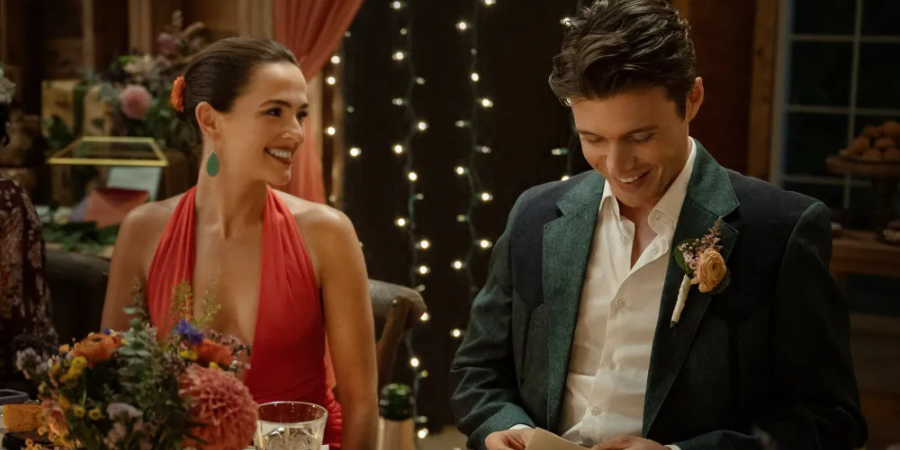
The internet is currently having a collective meltdown over Netflix’s newest romantic comedy. Dropping onto the platform on June 19, 2026, the film quickly skyrocketed straight to the top of the streaming charts. On paper, it looks like an absolute triumph for the genre.
Early reports highlight that the Voicemails for Isabelle audience score reached a dizzying 91% on Rotten Tomatoes within days of its premiere, accompanied by an absolute flood of tearful TikTok reactions and glowing tweets.
The story follows Jill (Zoey Deutch), an aspiring pastry chef in San Francisco who is completely paralyzed by grief following the sudden death of her younger sister, Isabelle (Ciara Bravo), who suffered from cystic fibrosis. To cope, Jill treats her sister’s old phone number like an audio diary, leaving deeply personal, chaotic, and raw messages.
The twist?
The number has been reassigned to Wes (Nick Robinson), a high-end real estate agent down in Austin, Texas. Instead of doing the normal thing, like blocking the number or sending a quick text to let her know she has the wrong person, Wes keeps listening. He becomes totally consumed by her life and eventually flies across the country to orchestrate a “perfect” relationship based entirely on her leaked secrets.
While the internet is busy calling it the most emotional, beautiful film of the decade, a closer look at the actual viewer sentiment reveals a massive divide. Look past that shiny, inflated aggregate score, and you’ll find a loud, growing contingent of viewers who are pointing out glaring narrative red flags that make the central romance look less like a fairy tale and more like a psychological horror story.
The Dark Reality of the Gimmick: Romance or Modern Stalking?
The primary reason the Voicemails for Isabelle audience score is sparking such fierce debate across Reddit and Letterboxd comes down to a fundamental disagreemeent over what constitutes “romance” in 2026. The film operates heavily within a high-concept gimmick heavily reminiscent of classic netflix movies that rely on a central communication barrier.
Classic Communication Gimmicks vs. “Isabelle”
| You’ve Got Mail (1998) | -> Mutual, anonymous emails |
| The Shop Around the Corner (1940) Ground | -> Anonymous letters, equal |
| Voicemails for Isabelle (2026) | -> One-sided surveillance of grief |
For a large portion of the audience, Wes’s behavior crosses a massive ethical line. He actively uses the inside intelligence gathered from Jill’s mourning process to engineer a customized personality that perfectly targets her vulnerabilities. When you strip away the warm, hazy lighting and the soft indie soundtrack, the voicemails for isabelle plot is built on a foundation of profound manipulation.
Viewers analyzing the voicemails for isabelle reviews note that while the first half of the film successfully sweeps you up in the nostalgia of 2000s-era rom-com grand gestures, the third-act reveal hits like a bucket of ice water.
When Jill inevitably discovers that her entire relationship was built on a man weaponizing her dead sister’s phone line, the emotional violation is massive. Critics of the film argue that the narrative forgives Wes far too quickly, brushing a deeply toxic, wobbly-bounded invasion of privacy under the rug for the sake of a tidy, standard happy ending.
Exceptional Chemistry Masking Deep Narrative Flaws
If the premise is so inherently creepy, why is the general voicemails for isabelle review landscape still so overwhelmingly positive? The answer lies almost entirely in the sheer magnetism of the voicemails for isabelle cast.
Zoey Deutch single-handedly keeps the entire production afloat, cementing her status as the undisputed queen of the modern streaming rom-com.
She brings an incredible, loose-limbed energy to Jill that balances profound, soul-crushing grief with sharp comedic timing. Whether she is flying into a workplace rage at her tyrannical boss, Chef Bastien (played with delicious malice by Nick Offerman), or sobbing on a hill overlooking the Golden Gate Bridge, you cannot take your eyes off her.
“Zoey Deutch has officially evolved into the Meg Ryan of the streaming age… She can elevate the absolute hell out of a mediocre script.”
- Film Critic Sentiment, June 2026
Nick Robinson also works overtime to keep Wes likable. He plays the character with a boyish, clueless charm that actively distracts the audience from how unhinged his actions actually are. The on-screen chemistry between Deutch and Robinson is undeniably electric, culminating in a final sequence soundtracked by Robyn’s “Dancing on My Own” that has left thousands of viewers completely compromised emotionally.
Furthermore, the film features exceptional supporting turns from Lukas Gage as a toxic coworker and Harry Shum Jr. as Wes’s married best friend, Andy. In many ways, Shum’s character serves as the voice of the audience, explicitly telling Wes how completely insane his plan is.
It’s this self-awareness within the script, written and directed by Leah McKendrick, that tricks viewers into lowering their guard. The movie knows it’s playing with fire, but it counts on the cast’s collective charm to make you ignore the smoke.
Why Media Literacy is Splitting the Rotten Tomatoes Score
When looking up voicemails for isabelle where to watch information to stream the flick on Netflix, audiences are walking into an unspoken culture war regarding modern media literacy. The sharp divide within the voicemails for isabelle netflix viewership highlights how differently generations consume romantic media.
- The Romantic Casuals: Viewers who focus purely on the emotional journey, the grief representation, and the nostalgic, sweeping grand gestures. To this group, the film is a perfect 8/10 tearjerker.
- The Analytical Skeptics: Viewers who dissect the power dynamics, consent violations, and moral gray areas of the plot. This crowd argues the film actively romanticizes surveillance and predatory behavior.
This is a case of a movie that achieves its emotional goals so effectively that it successfully blinds the majority of its audience to its own internal horror elements. It is an incredibly fascinating case study in how a pristine audience score can act as a shield against critical structural critique.
Conclusion
Ultimately, Voicemails for Isabelle is a beautifully acted, emotionally volatile experience that confirms Leah McKendrick is a director to watch and Zoey Deutch is a certified star.
However, that 91% audience score shouldn’t be taken at face value. The movie functions as a mirror for the viewer: if you can completely suspend your real-world ethics and sink into the gloss of Hollywood romance, you’ll likely find it a heartbreakingly beautiful ride.
But if you think about the mechanics of the romance for more than five minutes after the credits roll, those red flags become completely impossible to unsee.




