
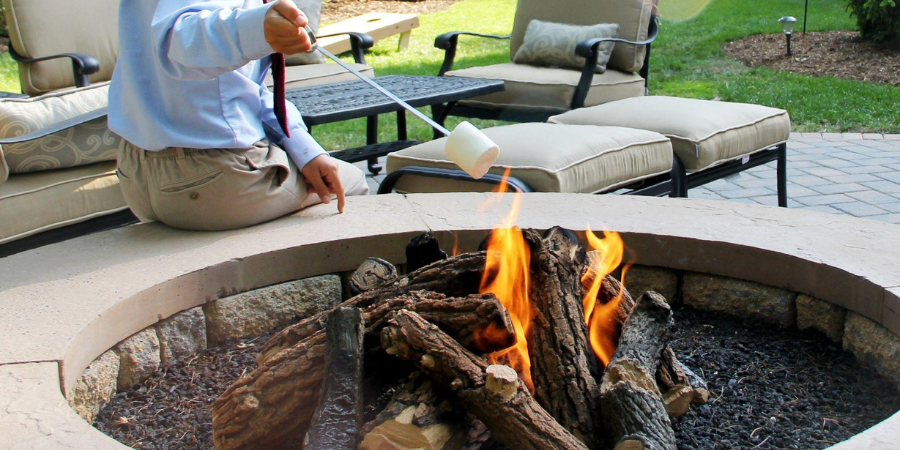
There is something almost magical about sitting around a fire on a cool Pacific Northwest evening — the pop and crackle of the flames, the warmth pushing back against the damp air, the smell of cedar smoke drifting through the trees. A fire pit patio in Issaquah lets you enjoy those moments from your own backyard. But building one that actually holds up to our legendary rainfall takes more thought than most homeowners expect.
Issaquah gets over fifty inches of rain per year. That is not a detail you can ignore when planning a fire pit patio. The wrong materials, poor drainage, or a bad layout will leave you with a patio that floods, a fire pit that collects rainwater like a birdbath, and cushions that grow mold before Thanksgiving. Done right, though, a fire pit patio in Issaquah becomes the most-used space in your home — rain or shine.
[IMAGE: A stone fire pit patio with comfortable seating surrounded by lush PNW landscaping on a misty evening — Source: Unsplash/Pexels — Alt text: fire pit patio Issaquah with stone hardscaping and seating area on a Pacific Northwest evening]
Why Issaquah Is Perfect for Fire Pit Living
Issaquah sits at the base of the Cascades where the foothills meet suburban life. The setting is naturally beautiful — mature evergreens, mountain views, and a landscape that stays green most of the year. A fire pit patio takes advantage of all of it by giving you a front-row seat to your own backyard scenery.
The cooler temperatures that come with Issaquah’s elevation make a fire pit feel necessary rather than decorative. While homeowners in warmer climates might use their fire pit a handful of times per year, Issaquah residents can gather around one from September through May and still appreciate the warmth on chilly June evenings. That extended season makes the investment worthwhile in a way it might not be in other parts of the country.
Neighbors in Sammamish and Bellevue share similar conditions and are making the same calculation. A fire pit patio is not a luxury here — it is how you get real use out of your backyard for eight to ten months of the year.
Picking Materials That Handle the Rain
Material selection is where fire pit patios in the PNW succeed or fail. Everything you put outside in Issaquah will spend half the year soaked in rain, so choosing materials that handle constant moisture is not optional — it is the foundation of the entire project.
Patio Surface: Go With Natural Stone or Quality Pavers
Poured concrete is the budget option, but in Issaquah’s climate it cracks. Freeze-thaw cycles — yes, we get them at elevation — work their way into tiny surface cracks and expand them over a few winters. Natural stone like bluestone, basalt, or flagstone handles moisture and temperature swings far better. These materials also develop a beautiful patina over time that looks like they belong in the PNW landscape.
Interlocking concrete pavers are another strong option. High-quality pavers are designed to flex slightly with ground movement, which prevents the cracking issues you see with poured slabs. They also come in enough styles and colors to match anything from a modern Issaquah new-build to a classic Craftsman.
Fire Pit Construction: Built-In Beats Portable
Portable fire pits are fine for camping, but for a permanent patio setup in Issaquah you want a built-in fire pit constructed with materials rated for heat and moisture. Natural stone veneer over a steel or concrete core gives you the best combination of durability and aesthetics.
Gas fire pits are increasingly popular in Issaquah and across the Greater Seattle area because they light instantly, produce no smoke, and can be turned off the moment rain starts without worrying about dousing a wood fire. They also avoid the spark risk that makes some homeowners nervous in fire-prone foothills. Wood-burning fire pits deliver a more authentic experience, but they need a proper drain in the bottom and a cover for when they are not in use.
Seating Materials: Skip the Wood
Wooden benches and Adirondack chairs look great on a patio showroom floor, but in Issaquah they will be covered in green algae by February. Built-in stone or concrete seating walls around the fire pit are the most durable option. They never rot, they absorb heat from the fire and radiate it back to keep you warm, and they double as retaining walls if your patio sits on a slope.
If you prefer moveable furniture, aluminum frames with quick-dry mesh or solution-dyed acrylic cushions are your best bet. Store the cushions in a waterproof deck box when not in use and they will last years instead of one soggy season.
Drainage: The Invisible Feature That Makes Everything Work
A fire pit patio in Issaquah without proper drainage is just a fancy puddle. This is where experienced hardscape contractors earn their keep, and it is the single most important detail of the entire project.
Grading the Patio
Every patio surface needs a slight slope — typically one to two percent — directing water away from the fire pit and toward a drainage outlet. The slope should be subtle enough that furniture sits level but steep enough that water moves quickly off the surface. In Issaquah, where rain can come down sideways during winter storms, you cannot rely on gravity alone if the grade is too flat.
Subsurface Drainage Systems
Beneath the patio surface, a properly compacted gravel base serves double duty: it provides a stable foundation for the pavers and acts as a reservoir for water that percolates through the joints. A French drain around the patio perimeter catches runoff and channels it to a safe discharge point away from your home’s foundation.
Angkorscape builds drainage into every hardscape project because they know what happens when you skip it in the PNW. Moisture damage to foundations, heaving pavers, and standing water are all preventable problems — but only if drainage is designed in from day one, not patched in after the first winter exposes the flaws.
Fire Pit Drainage
The fire pit itself needs a drain. A simple PVC pipe running from the bottom of the pit to a gravel sump below prevents the bowl from filling with rainwater after every storm. Without this, you will spend ten minutes bailing water out of your fire pit every time you want to use it from October to May. With a properly installed drain, the pit stays dry and ready to light.
Layout and Design Considerations for Issaquah Properties
Issaquah lots come with character — which is a polite way of saying slopes, trees, and setback challenges. A cookie-cutter patio plan from a home improvement website rarely works here without significant modification.
Working With Slopes
Many Issaquah properties have grade changes that make flat patio construction tricky. Terraced designs with retaining walls work beautifully in these situations. The fire pit can sit on a lower terrace with seating walls stepping up to the main yard level, creating a natural amphitheater effect that feels intimate and sheltered.
Retaining walls also help manage the water that flows downhill during rainstorms. By incorporating drainage behind the walls, you control runoff before it reaches the patio surface. Homeowners in Sammamish and Bellevue with similarly sloped lots are using the same approach.
Wind Protection
Issaquah can get gusty, especially in the neighborhoods closer to the foothills. Positioning your fire pit patio where your house, a fence, or mature landscaping blocks the prevailing wind makes a huge difference in comfort. A fire pit that catches wind throws sparks, burns unevenly, and pushes smoke directly into your guests’ faces.
Strategic planting of evergreen hedges — western red cedar, emerald arborvitae, or tall native grasses — creates a natural windbreak that also screens the patio for privacy. It is a design move that solves two problems at once.
Distance From the House
Building codes in Issaquah and most Greater Seattle municipalities require fire pits to be at least ten to fifteen feet from any structure. This includes your house, your fence, your shed, and any overhanging tree branches. Plan your layout around this requirement from the start, not as an afterthought.
Lighting the Space for Year-Round Use
The fire itself provides some light, but relying on it entirely leaves the edges of your patio in darkness. Low-voltage LED path lights, step lights built into seating walls, and subtle uplighting on nearby trees extend the usable evening hours and make the space safer to navigate.
In Issaquah, where winter darkness arrives by four-thirty in the afternoon, good lighting turns a fire pit patio from a summer luxury into a year-round living space. The glow of warm-toned LEDs combined with flickering firelight creates an atmosphere that no interior room can match. Homeowners who invested in a complete hardscaping project for their outdoor space consistently say the lighting was the detail that made them actually use the patio through the darker months.
Maintenance in a Wet Climate
Keeping a fire pit patio looking good in Issaquah takes a little seasonal maintenance but far less than most homeowners fear.
Power-wash the patio surface once a year in early spring to remove the moss and algae that accumulate over winter. Clean out the fire pit drain before fall rains arrive. Inspect seating wall joints and paver edges for any shifting caused by freeze-thaw cycles. Reapply polymeric sand between pavers every two to three years to keep weeds out and joints tight.
If you chose gas, have your gas line and ignition system inspected annually. If you went wood-burning, clean out ash buildup after every few uses and keep a fitted cover on the pit when it is not in active use. These small steps keep your fire pit patio in Issaquah performing beautifully for decades.
Frequently Asked Questions
Can I use a fire pit patio in Issaquah during the rainy season?
Absolutely. Gas fire pits work even in light rain, and many Issaquah homeowners add a pergola or overhead cover nearby so they can enjoy the fire during drizzle. The key is proper drainage so the patio surface stays clear of standing water even during heavy rain.
How much does a fire pit patio cost in Issaquah?
A quality built-in fire pit patio in Issaquah typically runs between fifteen thousand and forty thousand dollars depending on the size, materials, and features like lighting and seating walls. Sloped lots that require retaining walls will be on the higher end of that range.
Do I need a permit for a fire pit patio in Issaquah?
Issaquah requires permits for permanent structures and gas line work. A built-in gas fire pit will typically need a permit, while a simple wood-burning fire pit under a certain height may not. Always check with the City of Issaquah planning department or work with a contractor who handles permits as part of the project.
What is the best fire pit style for the Pacific Northwest climate?
Gas fire pits are the most practical choice for the PNW because they light instantly, produce no smoke, and can be shut off immediately if rain picks up. Wood-burning fire pits offer a more traditional experience but need a drain and cover to manage rainfall. Both styles work well when properly built for our climate.
How do I keep moss from growing on my fire pit patio in Issaquah?
Moss growth is normal in our wet climate. Annual power washing in spring removes buildup, and using polymeric sand between pavers inhibits moss growth in the joints. Some homeowners embrace a light moss patina on natural stone as part of the PNW aesthetic, which actually looks beautiful in a naturalistic landscape.




