
Living on a hillside in West Seattle comes with views that people pay a premium for — Puget Sound sunsets, the Olympic Mountains on the horizon, and the quiet residential charm of tree-lined streets. But those same slopes create a problem that every hillside homeowner eventually faces: water running downhill, pooling against your foundation, and slowly working its way into your crawl space or basement. Foundation drainage in West Seattle is not a luxury. It is the difference between a dry, structurally sound home and one that deteriorates from the bottom up.
If you have noticed standing water near your foundation after November storms, cracks forming in your basement walls, or a crawl space that smells like damp earth no matter how many vents you open, this post explains what is happening and how to fix it before the damage compounds.
Why West Seattle’s Terrain Creates Drainage Nightmares
West Seattle sits on a peninsula of hills and ridges. Neighborhoods like the Junction, Admiral, and Fauntleroy are built on slopes that range from gentle to steep. When it rains — and in Seattle’s wet winters, it rains persistently for months — water follows gravity straight down those hillsides.
The soil in much of West Seattle is a mix of glacial till and clay. Neither drains well. Instead of soaking into the ground, rainwater sheets across the surface or travels just below it through the topsoil layer. Every home sitting downhill from higher terrain becomes a collection point for this runoff.
The situation is worse than it sounds because the water does not just splash against your foundation and flow away. It saturates the soil around your footings. Hydrostatic pressure builds. Water pushes through cracks in the concrete, seeps through porous block walls, and migrates under your slab. Over months and years, this constant moisture weakens the concrete, corrodes rebar, and creates conditions for mold growth that affects indoor air quality.
The Real Cost of Ignoring Foundation Water
Foundation damage from unmanaged runoff is not hypothetical. It is the most expensive repair a homeowner can face, and it gets more expensive the longer you wait.
Structural Cracking
When soil around your foundation stays saturated, it expands. When it dries out during Seattle’s brief summers, it contracts. This cycle of expansion and contraction puts enormous stress on foundation walls. Horizontal cracks, stair-step cracks in block walls, and vertical cracks that widen over time are all signs of this pressure. What starts as a hairline crack becomes a structural failure if the water source is not addressed.
Crawl Space and Basement Moisture
Moisture in your crawl space does not stay in the crawl space. It rises through the floor structure, warps hardwood, feeds mold on joists and subfloor, and makes your home feel perpetually clammy. In the Pacific Northwest, where outdoor humidity is already high from October through April, adding subsurface moisture to the mix creates a perfect environment for wood rot and fungal damage.
Erosion and Settling
On West Seattle’s hillsides, uncontrolled runoff erodes soil from around and under your foundation. This erosion causes differential settling — one side of your home sinks more than the other. Doors stick. Floors slope. Windows bind in their frames. Foundation leveling and underpinning to correct settling can easily cost fifty thousand dollars or more, making the drainage repair that would have prevented it look like a bargain.
Foundation Drainage Solutions That Work on Hills
Effective foundation drainage in West Seattle requires intercepting water before it reaches your home and redirecting it safely away from the structure. No single solution fits every property, but several proven approaches handle hillside runoff when properly designed and installed.
Curtain Drains
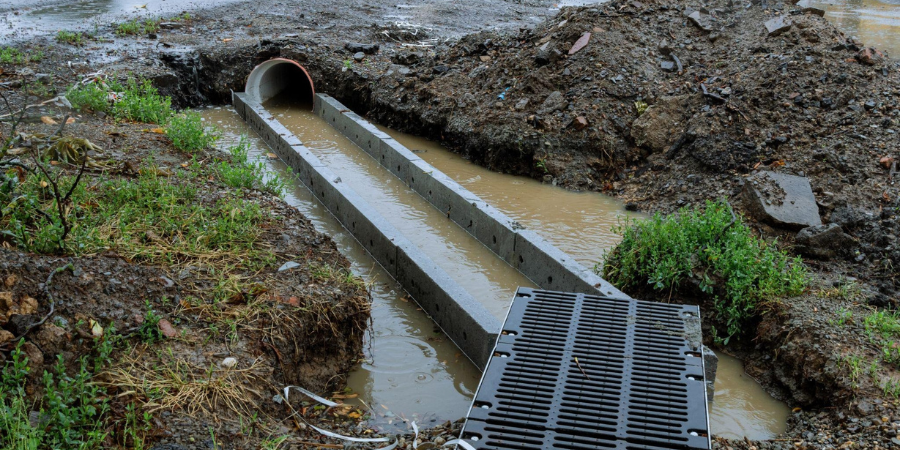
A curtain drain — sometimes called an interceptor drain — is a trench dug across the slope uphill from your home. It captures subsurface water as it flows downhill and redirects it around your foundation to a safe discharge point. This is often the most effective first line of defense for hillside homes because it addresses the water before it ever reaches the foundation.
The trench is typically eighteen to twenty-four inches deep, lined with filter fabric, filled with washed gravel, and fitted with perforated pipe. The pipe carries collected water to a discharge point at a lower elevation or connects to the storm drain system.
Footing Drains
Footing drains — also called perimeter drains — sit at the base of your foundation alongside the footings. They collect water that has already reached the foundation and channel it away. In West Seattle homes with basements, this is often the critical second layer of protection that keeps interior spaces dry.
For homes that already have failing or clogged footing drains, repair or replacement is essential. Old clay or concrete drain tiles installed decades ago deteriorate just like old sewer pipes. The team at Aces Four regularly replaces crushed and clogged footing drains around West Seattle homes that were installed forty or fifty years ago and have simply reached the end of their useful life.
Surface Grading and Swales
Sometimes the simplest fix is also the most overlooked. The ground around your foundation should slope away from the house at a rate of at least one inch per foot for the first six feet. On hillside lots in West Seattle, achieving proper grading on the uphill side can be challenging, but even modest regrading combined with shallow surface swales makes a noticeable difference.
Swales are gentle, landscaped channels that direct surface water around the house to a lower point on the property. They work with gravity rather than against it and can be designed to look like natural parts of the landscape rather than utilitarian trenches.
When Existing Drainage Systems Fail
Many West Seattle homes already have some form of drainage installed — it is just not working anymore. Understanding why existing systems fail helps you make better decisions about repairs.
The most common failure is clogged drain pipe. Soil particles, root intrusion, and iron ochre buildup gradually restrict flow until the pipe is effectively blocked. The system looks intact from the surface, but underground it is doing nothing. A camera inspection of your drain lines reveals whether cleaning can restore function or whether the pipe needs replacement.
Improper slope is another frequent problem. Drain pipes must maintain consistent downhill grade to function. If the pipe was installed with insufficient slope — or if ground settling has created low spots — water sits in the pipe instead of flowing out. These bellies collect sediment and accelerate clogging.
Undersized systems are the third common issue. A drainage system designed for a smaller home or lighter rainfall may be overwhelmed by actual conditions. Seattle’s rainfall patterns have shifted over the past two decades, with more intense storms delivering more water in shorter periods. A system that handled 1990s rainfall may not keep up with what falls on your West Seattle hillside today.
If your current drainage is not performing, the drainage repair specialists who work across Seattle’s hillside neighborhoods can diagnose what is failing and design a system that handles real-world water volumes.
Protecting Your West Seattle Home Long Term
Foundation drainage is not a set-it-and-forget-it system. Even the best-installed drainage needs periodic attention to keep performing in Seattle’s demanding climate.
Annual inspection of discharge points ensures they are clear and flowing. Checking catch basins and cleanouts for debris prevents backups. Every five to ten years, having your drain lines flushed with a high-pressure jet clears sediment buildup before it becomes a blockage.
Keep landscaping in mind too. Trees planted too close to drain lines will eventually send roots into the pipe, just like they do with sewer lines. Maintaining a buffer zone between large trees and underground drainage protects both systems. Homeowners in Capitol Hill, Ballard, and Shoreline face the same challenge — mature trees and underground pipes do not coexist peacefully without intentional management.
West Seattle’s hills are not going anywhere, and neither is the rain. But with proper foundation drainage, your home can handle both for decades to come. The key is acting before water damage escalates from a minor annoyance into a major structural problem.
Frequently Asked Questions
How do I know if my West Seattle home has a foundation drainage problem?
Look for standing water near your foundation after rain, damp or musty crawl spaces, efflorescence — white mineral deposits — on basement walls, cracks in your foundation that are widening, and doors or windows that have started sticking. Any of these signs in a hillside West Seattle home suggest water is not being managed properly around your foundation.
What is the difference between a curtain drain and a French drain?
They use similar construction — gravel-filled trench with perforated pipe — but serve different purposes. A curtain drain is installed uphill from your home to intercept water before it reaches the foundation. A French drain typically runs along the foundation perimeter to collect water that has already arrived. West Seattle hillside homes often benefit from both working together.
How much does foundation drainage repair cost in Seattle?
Costs depend on the scope of work. Simple cleanout and flushing of existing drains might cost a few hundred dollars. Replacing a failed footing drain system typically runs five thousand to fifteen thousand dollars. A comprehensive system with curtain drain, footing drain, and sump pump for a hillside home can range from ten thousand to twenty-five thousand dollars. The cost is relative to the foundation damage it prevents, which can easily exceed those numbers.
Can I just extend my downspouts to fix the problem?
Extending downspouts helps manage roof runoff but does nothing about subsurface water flowing downhill through the soil. In West Seattle’s hilly terrain, the water pushing against your foundation comes from the ground, not your roof. Downspout extensions are good maintenance but are not a substitute for proper foundation drainage on a sloped lot.
Does foundation drainage work in Seattle’s clay soil?
Yes, but the system must be designed for clay conditions. Clay soil does not drain naturally, which is exactly why foundation drainage systems are necessary. Proper installation uses washed gravel and filter fabric to prevent clay particles from clogging the perforated pipe. Experienced Seattle drainage contractors design systems specifically for the glacial till and clay soils found throughout West Seattle, Burien, and Shoreline.




