
Picking kitchen countertops in Park City isn’t the same as picking them anywhere else. At nearly 7,000 feet, the air is dramatically drier, temperature swings are more extreme, and the UV exposure through those big mountain-view windows is stronger than most homeowners realize. The countertop that performs beautifully in a Salt Lake City kitchen may crack, dull, or stain within a few years up here at altitude.
This isn’t about finding the trendiest material — it’s about choosing one that will look great and hold up in the specific conditions of Utah’s Wasatch Back. Here’s what actually works, what doesn’t, and why the decision matters more than you might think.
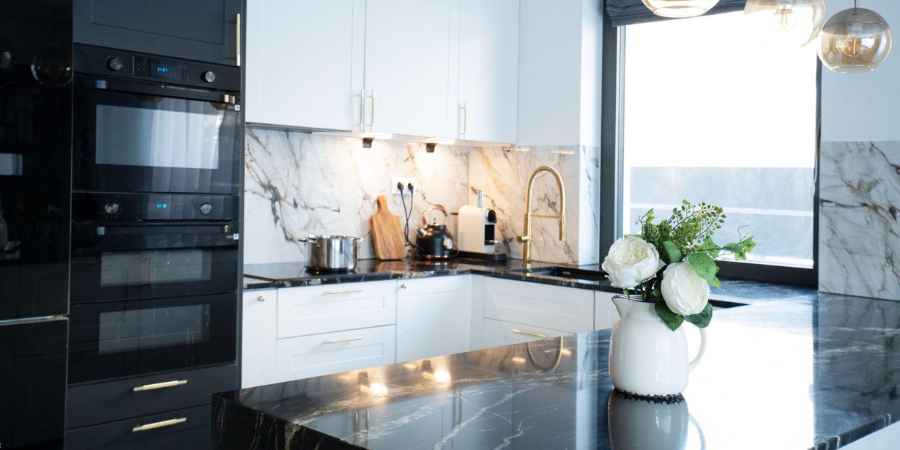
[IMAGE: A bright kitchen with quartz countertops and mountain views through large windows in a Park City home — Source: Unsplash/Pexels — Alt text: kitchen countertops Park City altitude with quartz surfaces and mountain view windows]
How Altitude Changes the Countertop Equation
Most homeowners don’t think about elevation when shopping for countertops. But the conditions at Park City’s altitude create a specific set of challenges that directly affect how materials perform over time.
The Dry Air Factor
Humidity in Park City regularly drops below 20 percent in winter. That kind of sustained dryness pulls moisture out of porous materials. Natural stones like marble and some granites can develop micro-cracks as they repeatedly absorb and release moisture with seasonal changes. Wood butcher block dries out and splits. Even the adhesives in some engineered surfaces can be affected over time.
Temperature Swings
A typical winter day in Summit County might see temperatures swing 30 to 40 degrees between morning and afternoon. Kitchens near exterior walls or with large windows — common in Park City’s mountain modern homes — experience these shifts more intensely. Materials that expand and contract with temperature changes face extra stress at altitude.
UV Exposure Through Glass
Park City homes are designed to capture views, which means big windows and lots of natural light. At altitude, UV radiation is roughly 25 percent stronger than at sea level. Countertop materials near south- and west-facing windows can fade, yellow, or lose their finish faster than expected. This is especially noticeable in homes throughout Heber Valley and Midway where open floor plans flood the kitchen with light.
Quartz: The Top Performer at Altitude
Engineered quartz has become the go-to kitchen countertop material in Park City for good reason. It’s non-porous, which means the dry air doesn’t affect it the way it affects natural stone. It doesn’t need sealing, it resists staining, and it handles temperature fluctuations without cracking.
Modern quartz comes in patterns that convincingly mimic marble, concrete, and natural stone, so you’re not sacrificing aesthetics for performance. Brands like Cambria, Caesarstone, and Silestone all offer lines that suit the mountain modern aesthetic popular in Summit County kitchens.
One Caveat About Quartz
Some quartz surfaces can discolor with prolonged direct UV exposure. If your kitchen has large south-facing windows, ask about UV-resistant formulations. Most premium brands now offer options specifically designed for high-UV environments, which is exactly what Park City kitchens need.
Granite: Reliable With the Right Selection
Granite has been a staple in Park City kitchens for decades, and it still performs well — with some important caveats. Denser granites with tight crystal structures handle altitude conditions better than more porous varieties. The key is choosing a slab that’s been tested for absorption rate.
Sealing Matters More at Altitude
In a lower-elevation home, you might seal granite countertops every two to three years. In Park City’s dry mountain air, annual sealing is a better practice. The low humidity draws sealant out of the stone faster, leaving it vulnerable to staining from cooking oils, wine, and everyday spills.
If you’re committed to granite, darker varieties with denser crystal patterns tend to perform best. They absorb less moisture and show less wear over time. Many homeowners in Kamas and the surrounding areas love granite for its natural warmth, and with proper maintenance it’s a solid choice for mountain kitchens.
Marble: Beautiful But High-Maintenance
Marble is stunning, and it’s popular in high-end Park City homes for a reason. But it’s also the most demanding countertop material in a mountain environment. Marble is porous, soft compared to granite and quartz, and highly susceptible to etching from acidic foods.
At altitude, the maintenance burden increases. The dry air accelerates moisture loss from the stone, which can cause hairline cracks over time. Sealing needs to happen twice a year at minimum. And those gorgeous white Calacatta slabs will show every water ring and lemon juice spill.
If you love marble, consider using it for a baking station or a specific prep area rather than as your primary countertop surface. That gives you the look and feel where you want it while using a more durable material for the high-traffic zones.
Butcher Block: Proceed With Caution
Wood countertops have a warm, inviting appeal that fits perfectly with the cabin and lodge aesthetics common in Lake City and Park City. But wood and dry mountain air are not natural allies.
Butcher block at altitude dries out fast. Without regular oiling — we’re talking monthly in winter — the wood will crack and separate at the seams. Walnut and maple are the most stable species, but even they need significantly more attention in a kitchen at 7,000 feet than they would at lower elevations.
Some homeowners make it work by being diligent about maintenance and keeping indoor humidity above 30 percent with a whole-house humidifier. If you’re willing to put in the effort, butcher block can be beautiful. If low maintenance is a priority, look elsewhere.
Concrete: The Mountain Modern Favorite
Polished concrete countertops have gained popularity in Park City’s contemporary homes. They offer a unique, industrial-meets-mountain aesthetic that photographs well and complements the clean lines of modern architecture in Summit County.
Performance at Altitude
Concrete is porous and needs sealing, similar to natural stone. In dry mountain air, concrete can develop hairline cracks if it wasn’t properly cured and sealed. A skilled fabricator who understands altitude conditions will use specific mix ratios and curing techniques to minimize this risk.
The advantage of concrete is customization. You can tint it, embed objects, and shape it to fit any kitchen layout. For homeowners doing a full kitchen remodel that reflects Park City’s unique style, concrete offers creative freedom that slab materials can’t match.
Making the Right Choice for Your Kitchen
The best countertop for your Park City kitchen depends on how you use the space, how much maintenance you’re willing to do, and what aesthetic you’re after. Here’s a quick framework for deciding.
If you want zero-maintenance durability, choose quartz. If you want natural beauty and don’t mind annual sealing, dense granite is your pick. If you’re designing a showpiece kitchen and accept higher upkeep, marble or concrete can deliver a one-of-a-kind look.
Whatever you choose, make sure your installer understands how altitude affects the material. Fabrication and installation techniques that work at lower elevations don’t always translate to mountain conditions. Renovation Brothers works with these materials daily in Park City and Lake City kitchens, and they know which products and techniques deliver long-term results at elevation.
The countertop is one of the first things people notice in a kitchen and one of the surfaces that takes the most abuse. In a Heber Valley or Midway home where the climate adds an extra layer of challenge, getting this choice right from the start saves money, frustration, and the hassle of a premature replacement.
Frequently Asked Questions
What is the best kitchen countertop material for homes at altitude in Park City?
Quartz is the top performer for kitchens at Park City’s altitude. It’s non-porous, so the dry mountain air doesn’t cause cracking or moisture issues. It doesn’t require sealing, resists staining, and handles the temperature swings common in Summit County without expanding or contracting noticeably.
Does altitude really affect kitchen countertop materials?
Yes. At Park City’s elevation of nearly 7,000 feet, the air is significantly drier, UV exposure is stronger, and temperature swings are more extreme. These conditions cause porous materials like marble and some granites to dry out, crack, or lose their sealant faster than they would at lower elevations.
How often should I seal granite countertops in Park City?
Plan on sealing granite countertops at least once a year in Park City. The low humidity at altitude draws sealant out of the stone faster than in lower-elevation homes. Lighter-colored and more porous granites may need sealing every six to eight months to stay protected.
Can I use butcher block countertops in a Utah mountain home?
You can, but it requires significantly more maintenance than at lower elevations. The dry air at altitude causes wood to lose moisture quickly, leading to cracking and separation. Plan on oiling butcher block monthly in winter and keeping your home’s humidity above 30 percent with a humidifier.
Do quartz countertops fade in Park City’s strong sunlight?
Some quartz surfaces can discolor with prolonged direct UV exposure, which is more intense at Park City’s altitude. If your kitchen has large south- or west-facing windows, ask for UV-resistant quartz formulations. Most premium quartz brands now offer options designed for high-UV environments.




