
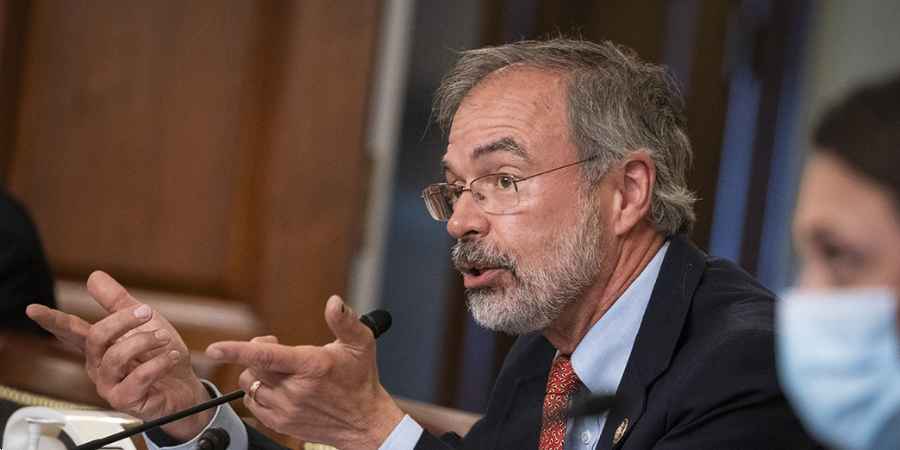
Image Source – politico.com
The Andy Harris debate with Democratic challenger Dan Schwartz brought fuel costs, rural health care, immigration and the future of Maryland’s Eastern Shore economy into sharp focus, as the two candidates faced voters in Cambridge on October 13.
The forum, hosted by the League of Women Voters, drew a packed audience to the Chesapeake Grove Intergenerational Center. The Republican incumbent and his Democratic challenger disagreed on several federal policies affecting the region, while finding common ground on opposition to Maryland’s proposed congressional redistricting changes. The exchange could prove particularly significant for residents whose livelihoods depend on farming, poultry production, seafood processing and other rural industries.
Andy Harris Debate Centers on Diesel Prices and Energy Policy
Fuel prices became one of the evening’s most contentious subjects when the candidates were asked about the Trump administration’s move to ease sanctions on Russian oil to address diesel prices.
Harris, who represents Maryland’s 1st Congressional District, acknowledged that diesel prices had increased but blamed Democratic environmental regulations for contributing to the problem. He argued that restrictions on domestic refining capacity had affected the country’s ability to supply fuel at lower prices.
Harris also advocated limiting diesel exports so more domestically produced fuel could remain available to American consumers. He said he opposed the administration’s arrangement involving Russian oil, despite attributing rising fuel costs to domestic energy policy.
Schwartz sharply criticised the proposal to ease Russian oil sanctions, connecting the decision to broader concerns about the administration’s foreign policy. His response drew a contrast between the candidates’ approaches to fuel affordability and the consequences of federal decisions.
The audience reacted loudly to Harris’s remarks, with laughter, groans and interruptions adding to the tension. The exchange reflected a broader concern across the Eastern Shore: higher diesel costs can put pressure on farmers, seafood businesses, transport operators and small businesses that rely on fuel to keep their operations running.
Rural Health Care and Federal Spending Divide the Candidates
Rural health care was another major issue during the Harris-Schwartz debate. The discussion addressed physician shortages, the needs of an ageing population and the financial pressures facing hospitals across the Eastern Shore.
Maryland is set to receive $168.2 million over five years through a federal rural health programme. Candidates were asked how they would ensure the funding reaches communities that need it and whether they would support additional federal reductions in Medicare payments to hospitals and physicians.
Schwartz criticised Harris over federal budget cuts affecting health care, food assistance and Chesapeake Bay funding. He argued that these decisions place additional pressure on families already dealing with rising living costs.
Harris defended his congressional record, pointing to funding he said he had secured for local infrastructure and community services, including hospitals, water towers, wastewater systems and fire companies.
The disagreement highlighted a central question for rural voters: how federal spending decisions will affect access to medical care and essential services in communities where alternatives may be limited.
Immigration Policies Raise Concerns for Poultry and Seafood Industries
The candidates also discussed immigration enforcement and its impact on industries that depend on immigrant labour, particularly poultry production, seafood processing and tourism.
Harris argued that the temporary worker system needs reform, while maintaining that temporary immigration protections should remain temporary. He referred to his work on the H-2A and H-2B visa systems, which allow employers to hire eligible foreign workers for agricultural and non-agricultural seasonal jobs, respectively.
Schwartz raised concerns about Haitian residents living under Temporary Protected Status, saying fear of deportation was affecting members of the community. He challenged the administration’s approach and argued that immigration enforcement was creating uncertainty for people who contribute to the local economy.
For employers, the debate raised practical concerns about workforce availability. Changes to immigration rules can affect recruitment, labour costs and the ability of seasonal businesses to operate, particularly in industries with time-sensitive production cycles.
Redistricting Emerges as a Shared Concern
Despite their differences, Harris and Schwartz agreed that Maryland should not redraw its congressional districts midway through the election cycle.
The dispute centres on a proposed constitutional amendment that would loosen existing standards for drawing congressional maps. The measure is scheduled to appear before voters in November 2026 and could give the Democratic-controlled state legislature greater flexibility in future redistricting.
Harris warned that the changes could weaken the Eastern Shore’s political representation by making it easier to redraw the district around electoral considerations. As Maryland’s only Republican member of Congress, he has become a central figure in the state’s redistricting debate.
Schwartz also opposed the proposed changes, arguing that Democrats should win the seat through an election rather than changes to district boundaries. However, he criticised Harris for not applying the same opposition to redistricting efforts in Republican-led states.
Their agreement on the issue therefore reflects different arguments about fairness and political representation rather than a shared position on every aspect of the national redistricting debate.
What the Debate Means for Maryland’s Eastern Shore Economy
The exchange offered a preview of the economic questions likely to shape the Maryland congressional race in the run-up to the November 3, 2026, midterm elections.
For farmers and transport businesses, diesel prices remain a direct operating concern. For hospitals and older residents, federal health funding and Medicare policy carry consequences for access to care. Immigration rules also matter to employers who rely on seasonal labour, while redistricting could influence how rural communities are represented in Washington.
Harris is seeking a ninth term and has emphasised his experience and record of delivering funding to the district. Schwartz has centred his challenge on affordability, the consequences of federal policy and the need for representation that responds to local concerns.
The debate did not resolve these differences, but it placed the economic pressures facing the Eastern Shore at the centre of the campaign. As Election Day approaches, voters will have to weigh the candidates’ competing explanations for rising costs and their proposals for protecting the region’s industries and public services.
Author’s Note:
I believe political debates are most meaningful when they move beyond party differences and address the everyday struggles of the people they represent. The discussion between Andy Harris and Dan Schwartz reminds us that fuel prices, rural health care, farming and employment are closely connected to the economic stability of a community. A rise in diesel costs, for instance, can affect much more than transportation; it can influence food production, business expenses and household budgets. What I take away from this debate is that leadership must be measured not only by promises or political arguments, but also by how effectively policies respond to people’s real concerns. Ultimately, informed voters and accountable representatives are both essential to building a stronger rural economy.
Frequently Asked Questions
What did Andy Harris say at the debate?
Harris blamed Democratic environmental regulations for contributing to higher diesel prices, advocated keeping more domestically produced diesel in the United States and defended his record of securing funding for Maryland’s 1st District.
Who is running against Andy Harris in 2026?
Democrat Dan Schwartz is challenging Republican incumbent Andy Harris in Maryland’s 1st Congressional District in the 2026 midterm elections.
How could the Maryland 1st District race affect farmers?
The candidates’ positions on diesel prices, agricultural labour, energy policy and federal spending could affect farmers’ operating costs, workforce access and the public programmes supporting rural communities.
When is the Maryland election in 2026?
The 2026 U.S. general election is scheduled for November 3, 2026. Voters in Maryland’s 1st Congressional District will decide whether Harris retains his seat or Schwartz wins the challenge.